
 JNR
JNR
 RANDM TORNADO
 FUMOT
FUMOT
 MERRY-MI
 VAPSOLO
 ADALYA
 BLUR
BLUR
 GHOST
GHOST
 HAYATI
 AL FAKHER
 SNUS
SNUS
 E-LIQUID
 OUTLET
 ZERO NICOTINE
 BIG PUFFS
Why do some flavors disappear… and then come back 🌀
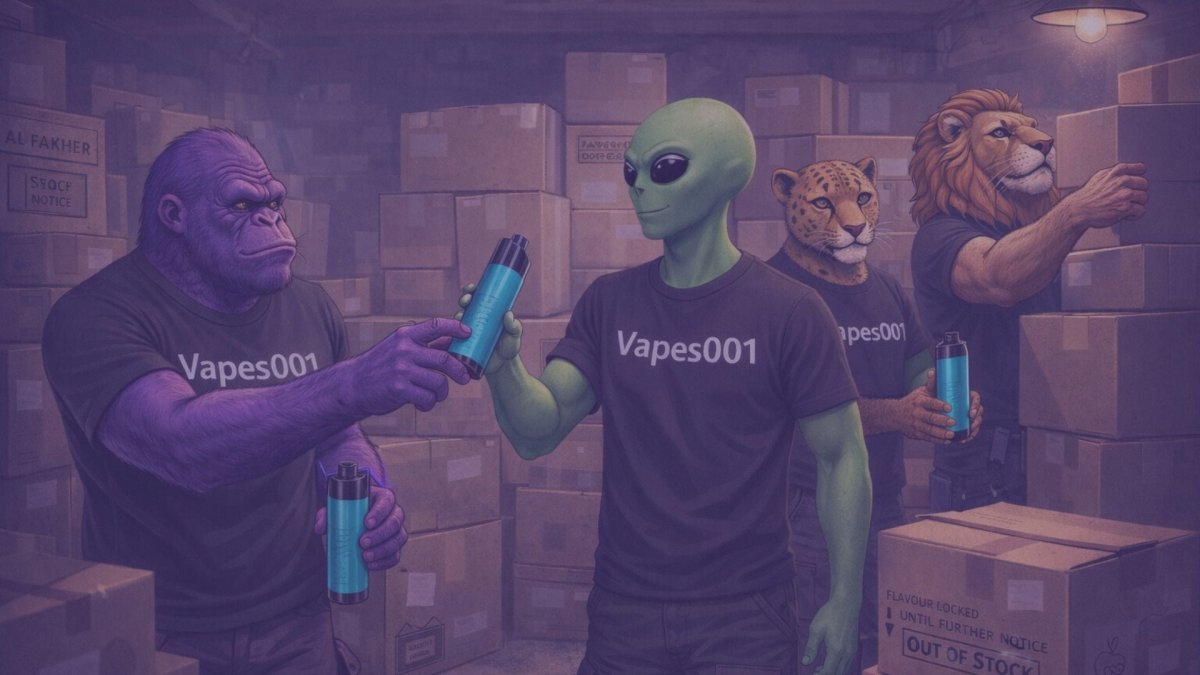
Factory shortages, batches, rotation: what’s really happening (and how to choose better)
If you use a disposable vape regularly, you’ve certainly experienced it: a flavor you love suddenly becomes unavailable, then reappears a few days or weeks later as if nothing happened. Many users immediately think of a quality problem, a permanent production halt, or even a “market mystery.” In reality, it’s often much simpler and above all, very logical when you understand the behind-the-scenes.
In the world of Vapes001 🌌💨, where solid brands like JNR, Fumot, Al Fakher, as well as Adalya, RandM, Mosmo, ELUX, and other popular references pass through, this question comes up frequently:
Why do some flavors disappear and then come back?
The answer comes down to three words: batches, rotation, logistics. And if we add a fourth dimension, we get the true reality on the ground: demand.
This article explains in depth (without fluff) what causes these stock “yo-yos,” how to distinguish a temporary shortage from a real disappearance, why big brands don’t produce everything continuously, and how to adopt a simple strategy to never be “stuck” on a single flavor again.
1) Production works in batches: the basic fact almost no one explains 📦
Most brands, even the biggest, do not produce every flavor continuously. They work in batches (batch production). This is a normal industrial model: rather than keeping all recipes in permanent production (which would be costly, complex, and risky), the factory plans:
-
a batch of flavors A (e.g., red fruits)
-
then a batch of flavors B (e.g., ice/menthol)
-
then a batch of flavors C (e.g., candy/gourmet)
-
then back to A according to demand, trends, and orders
Concretely, this means a flavor can be available in large quantities, then disappear when the batch runs out, and return in the next production cycle. It’s not a bug. It’s not a “punishment.” It’s just the industrial rhythm.
Why is this system also used by the “big names”?
Because a brand like JNR or Fumot often manages:
-
massive volumes,
-
multiple product lines,
-
multiple markets (countries, regulations, language packs),
-
and sometimes multiple designs/packagings depending on destinations.
Even if a brand is huge, it has to organize production to remain stable and avoid errors. That’s exactly why some flavors appear and disappear: the cycle follows the batches.
2) Flavor, raw material, component shortages: the reality of supply chains 🌿
When we talk about “flavor,” we just imagine a taste. But behind a flavor is a supply chain: aromatic raw materials, cooling agents (for “ice”), sweeteners, and sometimes specific components depending on the flavor profile.
Without getting too technical: it only takes a supplier being late or a material temporarily less available for the factory to have to:
-
slow down a batch,
-
shift a production,
-
or temporarily replace a planned flavor with another.
Very concrete examples
-
A highly demanded “ice” flavor may depend on a cooling component that is harder to obtain continuously.
-
Some complex fruity recipes (mixed red fruits, tropical multi-note) require multiple aromatic bases, so there is a higher chance an element will be missing.
-
A flavor also needs to remain consistent: if a supplier delivers a base that is not identical to the previous batch (difference in strength or stability), a serious brand may stop production rather than release a product that does not taste the same.
So yes: sometimes a flavor disappears simply because the factory does not want to release a “medium” batch.
3) Quality control: when a batch is delayed (or set aside) ✅
The importance of quality control is often underestimated. Yet for widely distributed products, it is a true pillar: consistency of flavor, taste stability, coil performance, hit regularity, etc.
It can happen that a batch:
-
is “ok” on paper,
-
but shows variation in flavor (less precise, too sweet, less stable),
-
or an anomaly is detected during testing (in certain manufacturing parameters)
Result: the brand may delay the batch release, re-test it, repackage it, or sometimes reclassify it. Meanwhile, from your perspective, you only see one thing: “out of stock.”
And when it comes back?
When the batch is validated, the flavor returns “all at once.” For the customer, it feels magical. For the factory, it’s just the end of a validation process.
4) Voluntary rotation: a commercial… but also sensory strategy 🔄
There is also a more “smart marketing” reason: voluntary flavor rotation. Some brands do not want their catalog to remain fixed permanently, especially when they have many references.
Why?
-
Demand shifts (trends),
-
Customers like to try,
-
And above all: the palate gets tired (palate fatigue).
A brand may decide to:
-
push certain best-sellers for a period,
-
rotate part of the catalog,
-
then bring back a “cult” flavor at the right time.
This creates an “anticipated return” effect, increases purchase rates, and prevents everyone from staying stuck on the same two flavors all year.
For disposable vape users, it works the same way: alternating fruity / ice / gourmet keeps the pleasure. For brands, alternating availability keeps interest alive.
5) Seasonality: flavors don’t live the same in summer and winter ☀️❄️
Seasonality is huge in disposable vape. Even if everyone has habits, we often observe:
-
in warm periods: explosion of ice/menthol flavors and very fresh fruity ones
-
in cold periods: return of rounder, sweet, “candy,” sometimes gourmet profiles
This is not an absolute rule but a real trend.
Why does this cause shortages?
Because a flavor can become a “bestseller” overnight depending on the season. And when demand explodes:
-
the batch empties faster,
-
restocking depends on the next cycle,
-
and the flavor may temporarily disappear.
Typical examples: Watermelon Ice, Blueberry Ice, Frozen Apple, but also very “sweet” and addictive combos like Strawberry Kiwi, Mixed Berries, Juicy Peaches, or candy profiles like Strawberry Watermelon Bubblegum.
6) Packaging, compliance, labeling: sometimes the flavor doesn’t disappear… it “changes box” 🧾
Another important point: a flavor may “disappear” simply because it is in a packaging transition. For example:
-
design change,
-
adjustment of label information,
-
adaptation to a specific market,
-
updating a range (new series, new graphic charter)
Meanwhile, some sellers pause the listing or mark it “unavailable” until the new batch arrives in the new packaging. Result: the customer thinks the flavor has been removed, when it is just in “migration”.
7) Logistics and distribution: producing doesn’t mean delivering everywhere at the same time 🚚
Even if the factory has produced a batch, there is still the path:
-
international shipping,
-
arrival in Europe,
-
storage,
-
distribution between warehouses,
-
availability according to flow.
The same flavor can be:
-
available in one warehouse,
-
but not yet in another,
-
or reserved for certain channels while redistribution occurs.
This often explains feedback like “it’s available at X but not at Y.” Without naming other sites: remember the general idea logistics causes delays.
And this delay can be amplified in busy periods (holidays, promotions, weekends, volume peaks).
8) Allocation & best-sellers: some flavors go first… always 📈
There are flavors that act as “order magnets.” When they come back, they don’t stay long:
-
they are well-known,
-
they have a fan base,
-
they are often “safe” (easy taste, immediate pleasure),
so they sell out quickly.
This is a common phenomenon with big brands like JNR, Fumot, Al Fakher, but also with highly demanded lines like Adalya, RandM, Mosmo. Customers want the “sure bet.”
Result: the flavor comes back… and quickly runs out. Then it comes back again in the next cycle.
9) Real disappearance vs temporary shortage: how to tell the difference? 🧠
This is THE question: is the flavor gone for good, or is it just a “dip”?
Signs of a temporary shortage
-
the flavor is a known bestseller
-
it has had shortages in the past
-
it returns regularly in batches
-
close alternatives exist in the range (so the brand maintains this style)
Signs of a real disappearance (rarer)
-
the range is replaced by a new series
-
the flavor name is removed from brand communications
-
it does not return over multiple production cycles
-
an official replacement is observed (flavor “version 2” or renamed)
In most cases, especially for popular flavors, it’s temporary.
10) The solution for disposable vape users: no longer depend on a single flavor 🎯
The best way to avoid shortages is simple: adopt a rotation strategy.
The winning trio
-
Fruity (e.g., Strawberry Kiwi, Mixed Berries, Juicy Peaches)
-
Ice/Mint (e.g., Watermelon Ice, Blueberry Ice, Frozen Apple)
-
Sweet / candy / light gourmet (e.g., Strawberry Watermelon Bubblegum, or a rounder profile according to your taste)
Even if your “number 1 flavor” disappears, you have:
-
a close alternative,
-
and a contrasting alternative,
which maintains pleasure and avoids frustration.
A very effective tip: the “aromatic neighbor”
When a flavor is missing, choose a flavor that shares the same core aromatic profile:
-
Strawberry Kiwi → Strawberry Ice / Mixed Berries
-
Watermelon Ice → Frozen Apple / another fruity Ice
-
Peach Mango (out) → Peach Mango Watermelon (close variant)
-
Love / Strawberry Splash → a similar soft fruity flavor (depending on availability)
This helps you stay in the same mood.
11) And for brands (JNR, Fumot, Al Fakher…): why do they manage it this way?
Because they optimize 4 things:
-
Stability: release consistent batches
-
Industrial cost: avoid permanent production of everything
-
Quality: control the output before mass distribution
-
Market: follow actual demand and trends
And the bigger the brand, the more it has to structure rotations to avoid creating chaos in its catalog.
12) The important point: a small model without a “big verification machine” doesn’t mean “bad”
Even though we are talking about shortages here, it’s worth reminding: not everything is standardized in the industry. Some small series or new models have:
-
simpler packaging,
-
fewer anti-counterfeit tools (not always QR),
-
progressive launch
This doesn’t make them wrong. It just makes them “newer” or more minimalist. What matters is consistency: brand, packaging, finishes, and point-of-sale reliability.
Quick FAQ (very useful, highly searched) 🔎
“Why is my favorite flavor out of stock while others are available?”
Because production is in batches: some recipes are made at a specific time, then the line moves to other flavors.
“Does this mean the brand stopped the flavor?”
Not necessarily. Most of the time, it’s temporary. A real disappearance is confirmed over several cycles or via an official replacement.
“Why does it come back all of a sudden?”
Because a new batch was produced, tested, then shipped and distributed.
“How to avoid frustration from shortages?”
Rotation + close alternatives (aromatic neighbors). It’s the simplest method.
Why choose Vapes001 (subtle, but real) ⭐
When you understand that shortages are often a combination of batches + rotation + logistics, you immediately see the value of a shop that knows how to manage diversity intelligently.
At Vapes001, the idea is not to make you depend on a single “star” reference, but to offer a universe where you can:
-
find strong brands like JNR, Fumot, Al Fakher (and other must-haves),
-
discover coherent alternatives when a flavor is temporarily unavailable,
-
build a true rotation (fruity / ice / sweet) to never get bored,
-
and enjoy a wide enough choice so your disposable vape experience remains consistently enjoyable, even when the factory operates in cycles.
And most importantly, by staying in a living catalog, you avoid the trap of “I’ll wait a month without a solution.” Missing a flavor? You usually have something to stay in the same style or try a variant that could become your next favorite (this is often how new favorites are born 😄).
If you’re looking for a stable, varied, and always exciting disposable vape experience, the best move is simple: keep 2–3 flavors in rotation, choose reliable models, and rely on a selection that truly follows trends and arrivals exactly the Vapes001 spirit 🌌💨.